
This week we will focus on tennis footwork and shadow stroke drills to help players refine their coordination and contact moves.
Here are great warm up drills for maintaining balance and coordination:
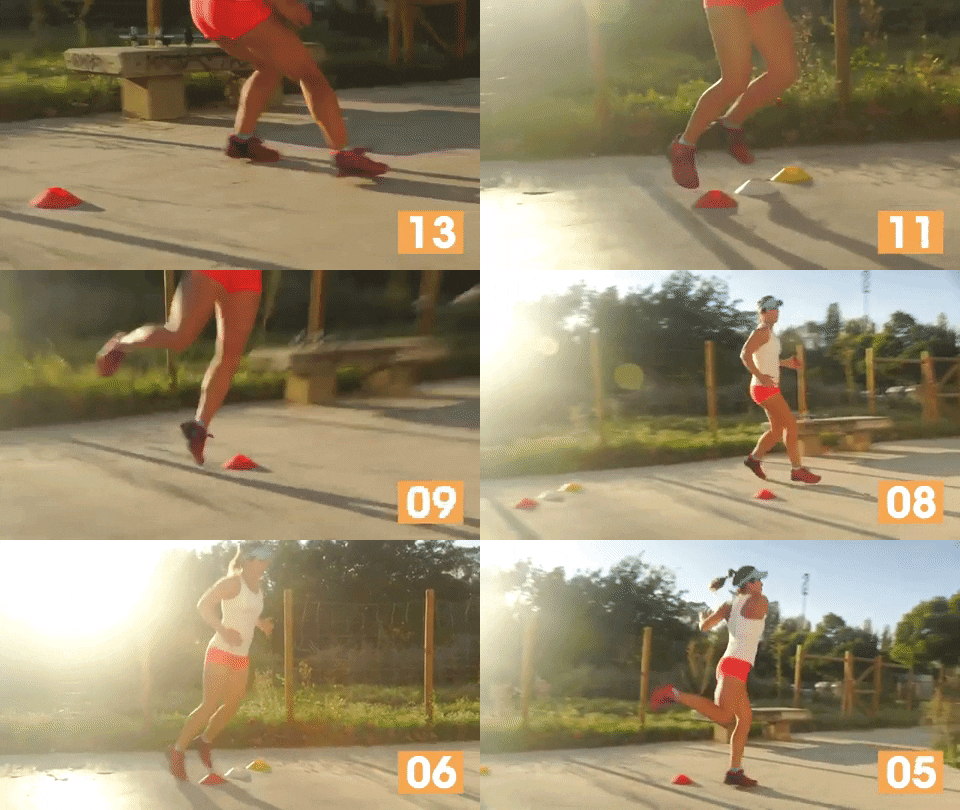
This week we will focus on tennis footwork and shadow stroke drills to help players refine their coordination and contact moves.
Here are great warm up drills for maintaining balance and coordination:
In this lesson, I discuss the forehand Slice which is a required skill for defending and changing the pace and trajectory of the ball and its also useful for returning serve.
Grip: index knuckle at 1:00pm
Stance: neutral, less common-semi-open and closed
In this session, we will learn the basics of the two hand backhand. For right handed players, the right index knuckle is on the 1 o’clock position and the left index knuckle is on the 9pm position. The right hand is on the bottom of the handle and left hand on top.
The stroke follows a rhythmic dance move where the player pivots to the contact point, makes adjustment steps and lands the left foot just inside the path of the ball where contact will be made and then the racquet will go fully back and if the player has time they will take a small right foot forward step to load up the core. The player will unload by uncoiling the body towards contact, allowing the racquet head to drop slightly below the level of the ball contact, leading with the handle. Contact is made near the front foot, while pulling the handles towards contact and upwards. The player will finish with a full pivot back to a net facing position. The left wrist will have some extension as you start your forward pull to contact, pointing the end of the racquet forward. The racquet tip should be slightly higher than the handle on the take back and as the racquet is pulled forward the racquet tip should tilt down below the level of the handle as you pull the racquet up towards the ball. The racquet tip will be rising through contact and finish well above the level of the ball as you extend beyond contact and decelerate the racquet over you shoulder on your right side.
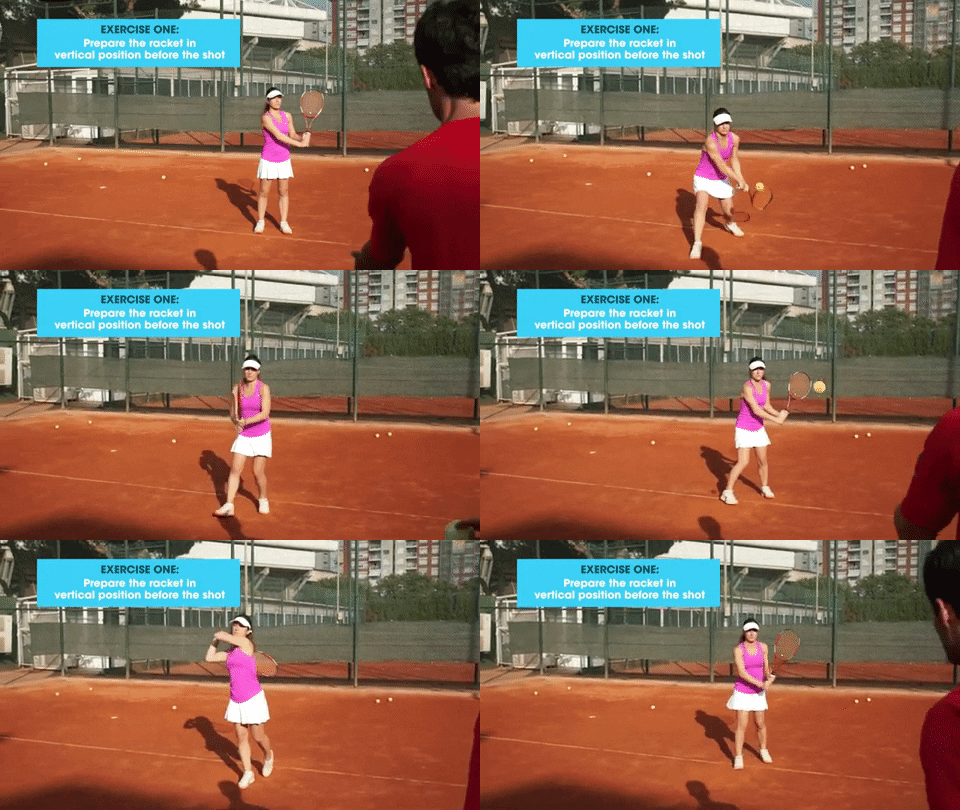
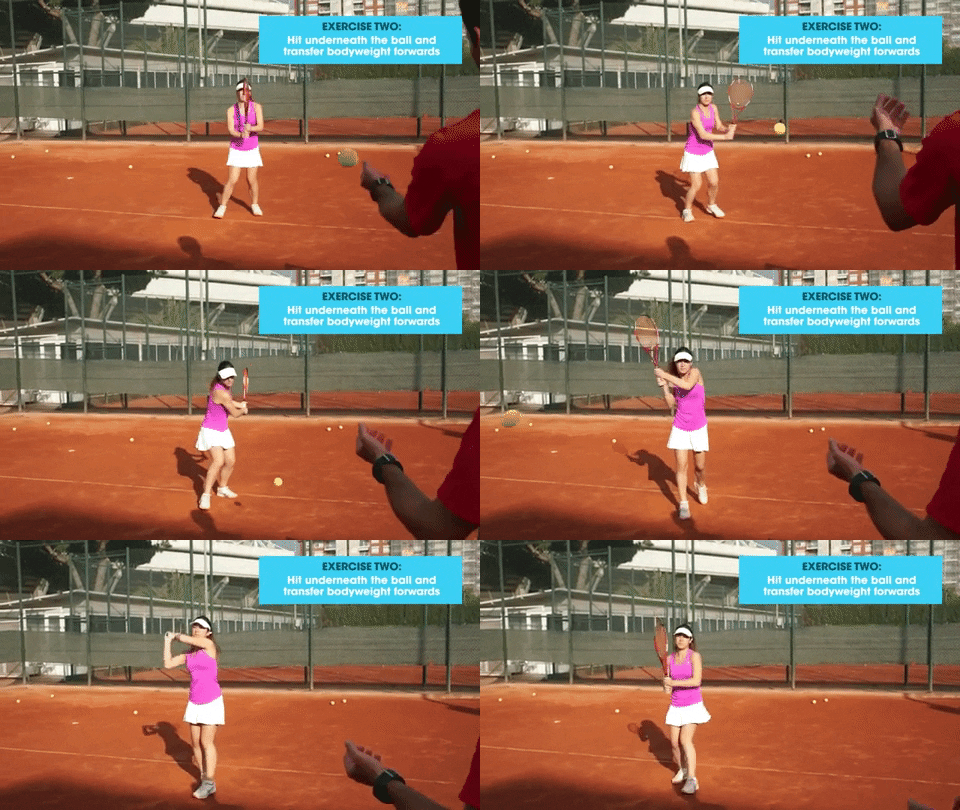
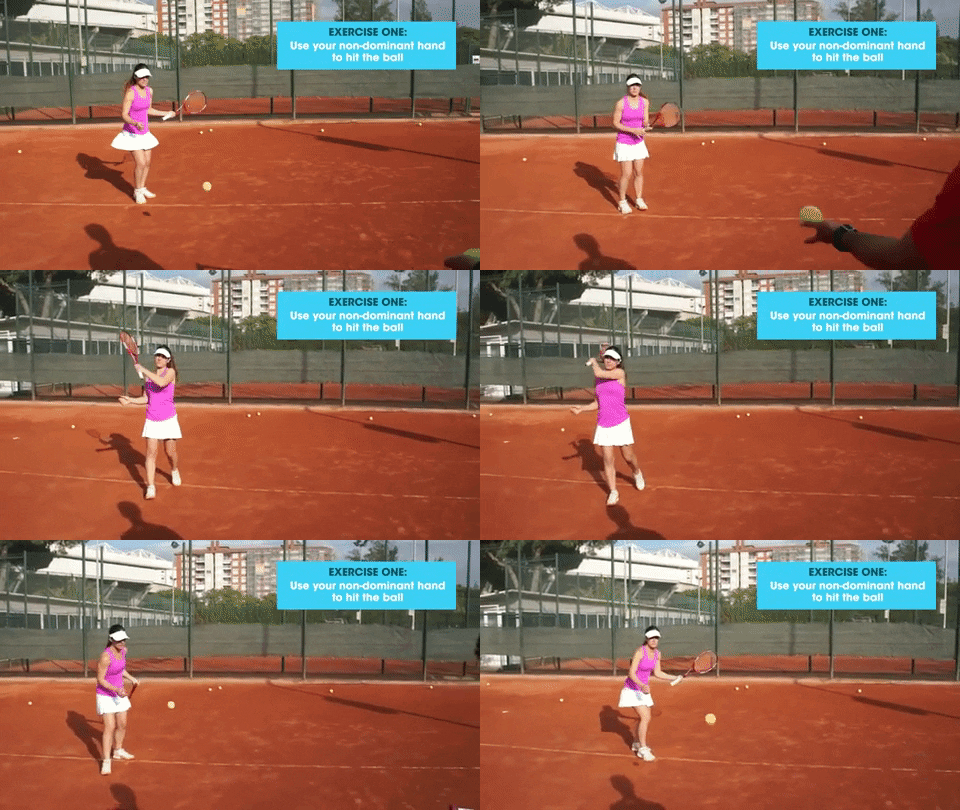
https://youtube.com/clip/Ugkx3VZ2rsEcuZvAK4pmVBRScSTHgJx6J5j-
As with all shots, progressive scenario training is key to refining the skill. I like a 3 ball drill where you target cross court, then middle then down the line. You can start with drop feeds, then move on to hand toss feeds, then racquet feeds from mid-court. Then you follow this with another 3 ball drill, high loop cross court, short angle cross court and down the line. The last 3 ball scenario trains receiving different heights, speeds and spins. First ball is short, with a cross court target, second ball is immediately fed deep to challenge the players defensive footwork skills and the third ball is fed to the forehand on the run.
Target training and scenario training should be the focus once the technical and foundational elements are solid. Shadow stroking and garage door rally’s can refine the technique and on court practice will round out the receiving skills and target based training. Just making balls in play, making good contact and proper footwork are the initial goals.
The two hand forehand is fundamentally very similar to a proper single hand forehand respective to the mechanical motions. Learning and playing tennis two handed can eliminate many of the technical flaws that players develop. There are many advantages of learning and playing double handed and the transition to single handed can be pretty easy if the athlete desires and we recommend learning one handed techniques too, including how to drop feed and defensive slice skills.
I the on court demo’s above, notice the initial unit turn and the pivots, driving the hip forward and towards the contact point.
A jump rope is required equipment for tennis players, and arguably a jump rope should be purchased before your first tennis racquet.
This drill, while challenging, is the gold standard for tennis players and it should be performed on a weekly basis for pre-training warm up.
Here are the routines: Twisting-Split; Bouncing-split; Ready steps-split; One-Two-Split; Toes down-split; Toes up-split; kicking-split; Lateral push-split; side-to-side- split; Forward walk-split, backward walk-split;
One of the best tennis fitness benchmark tests for junior players is the spider drill. At a minimum, this test should be done yearly, however I recommend seasonally or 3 times per year.
The drill is very simple and is done on a tennis court. You place five balls at the intersection of the 3 inside linear lines of the court. Baseline-singles sideline ad side; service line-singles sideline ad side; baseline-singles sideline deuce side; service line-singles sideline deuce side; and lastly, the center line-service line.
The player starts at the center baseline and is timed. Pick up one ball at a time and drop on a racquet that is placed on the baseline center. The timer is stopped when the last ball is placed. Times should range between 15 seconds for elite athletes to 22 seconds for a minimum speed to play full court tennis. Times that are over 22 seconds may not be ready for full court tennis. Times between 18-20 seconds are average for MS and HS tennis players.
In today’s video we’re going to learn how to use use a defensive footwork pattern pattern at home on the garage door.
Tennis development is a journey and if you look at many great professional players, you will find that a parent coach was often involved in the development. Parents always have a role in tennis development and the conventional wisdom is the parent should only serve a support function. I disagree with this mindset.
Parents should educate themselves on how to play a more active role in the development of their child’s tennis skills. This doesn’t mean an exclusive role, but a supplemental role. Even parents that have zero tennis playing experience absolutely can play a role in the development of their kids, even when they become good players.
Let’s break things down to the basics here for those parents that have children just learning to sport. Assuming the kids have some decent hand eye coordination and are relatively athletic.
The basic skills in tennis are: sending skills (ball striking), receiving skills (ability to judge the ball, move and coordinate the body into a position to strike the ball). We can also break it down into some specific segments: starting the point (serving, returning, underhand feeding), rallying and finishing the point (volley’s, overheads, winners, forcing errors).
Most tennis coaches spend the bulk of the time working on just one segment, the rally skill. We focus equally on the point starting, point ending and rallying skills to create balanced players that can play the game sooner than later.
Underhand feeds is the skill that kids should be working on with parents or siblings, after all, how can you play tennis if you can’t start the point. An underhand feed has many of the foundational elements of tennis: proper grip, balance, rhythm, contact point, finish. Be sure to place targets out so the kids understand the different contact points for the different targets and so they can get used to the racquet face angle relative to their hand/palm position.
Once the underhand feed is consistently going towards the intended target, you can work on receiving drills where you hand toss to the left and the right of the player and work on their pivoting, movement, positioning and contact point with targets. This drill will be a challenge at first. Be sure to use the targets even though the players are likely going to struggle with this. They need to train their brain on what makes the ball travel on specific trajectory paths. Contact point and racquet face angle are keys to this drill. A coach can’t tell a kid specifically what the degree angle of the racquet is or what vector the racquet needs to travel. These are things repetition and trial and error will be required to train the brain.
The following drill is to help the players work on directional control. Three targets are placed on the opposite side of the net and you drop feed 3 balls on the forehand side and the player tries to hit to each third of the court.
The progression of the drill then moves to the backhand side, again 3 balls at a time to each third of the court.
The last progression is to alternate between forehand and backhand. Once the players can consistently hit to these targets from a static position, then you start feeding away from them so they have to move and hit to those same three targets.
The Tennis Development Innovation camps are a fun way to learn tennis and meet other players. We incorporate tennis skills with other paddle sport games like SPEC tennis and Pickleball which allows the kids to learn the sports in more of an open skill manner. Our game based approaches get the kids playing the sport faster than just focusing on prescriptive techniques that take too long to learn. We offer camps and small group training at Waxhaw Swim and Tennis formerly Valhalla Swim, off Viking drive in Waxhaw, NC. Our camp instructors are college and HS tennis player that have been formally trained and have years of experience teaching tennis.
To sign up for a week long camp or group clinic, follow this page: https://tennisdevelopmentinnovation.wordpress.com/tennis-summer-camp-2021-waxhaw-swim-tennis/
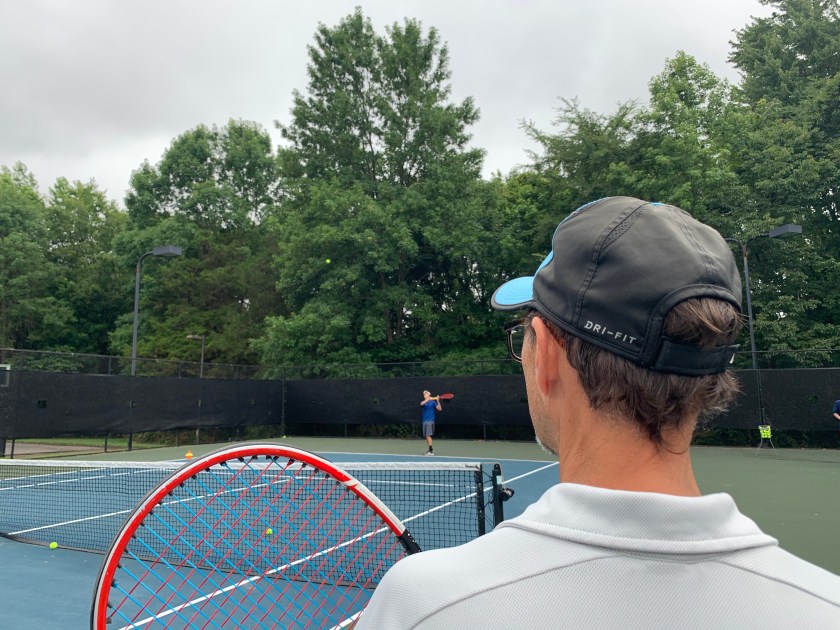
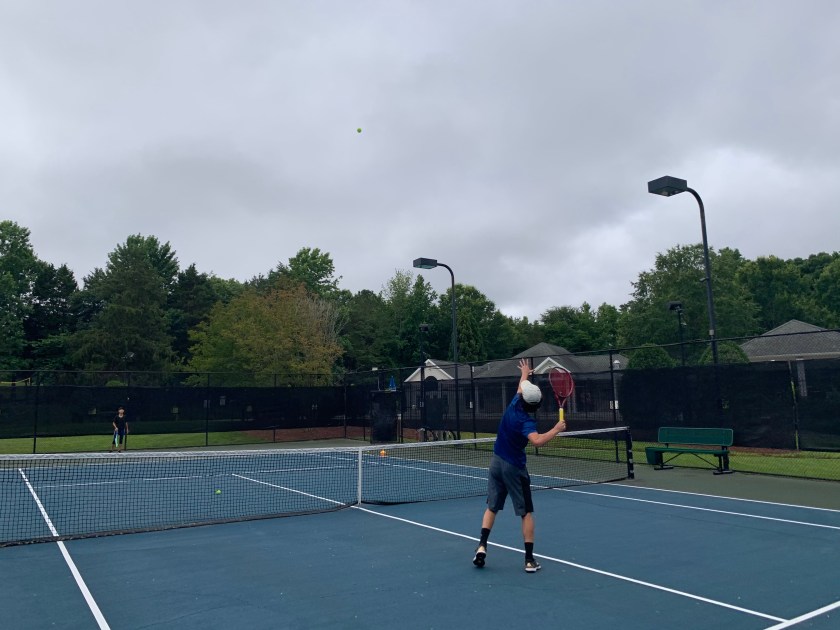
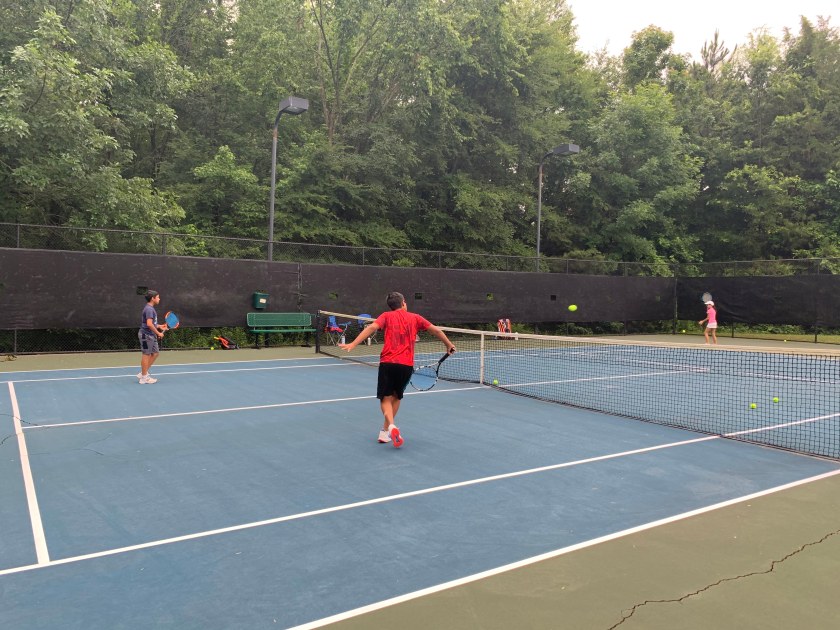


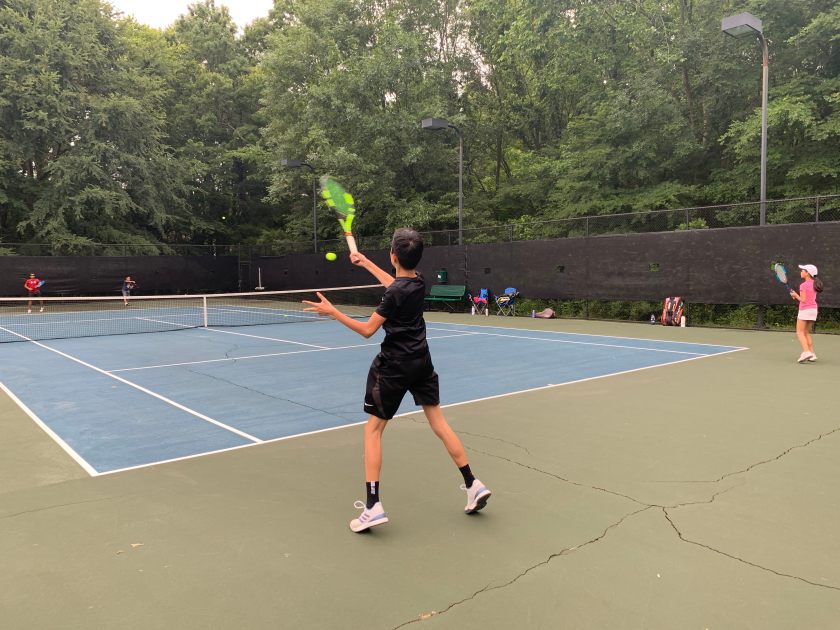
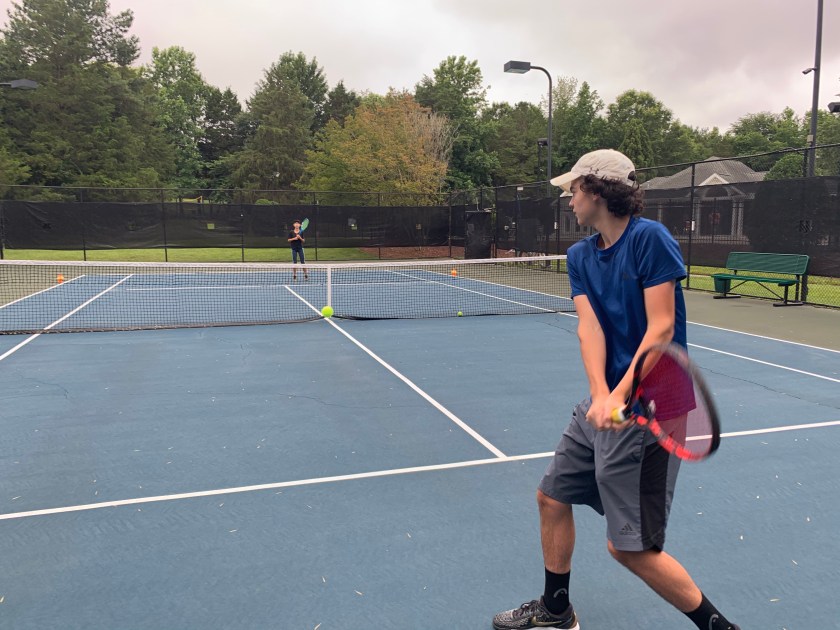

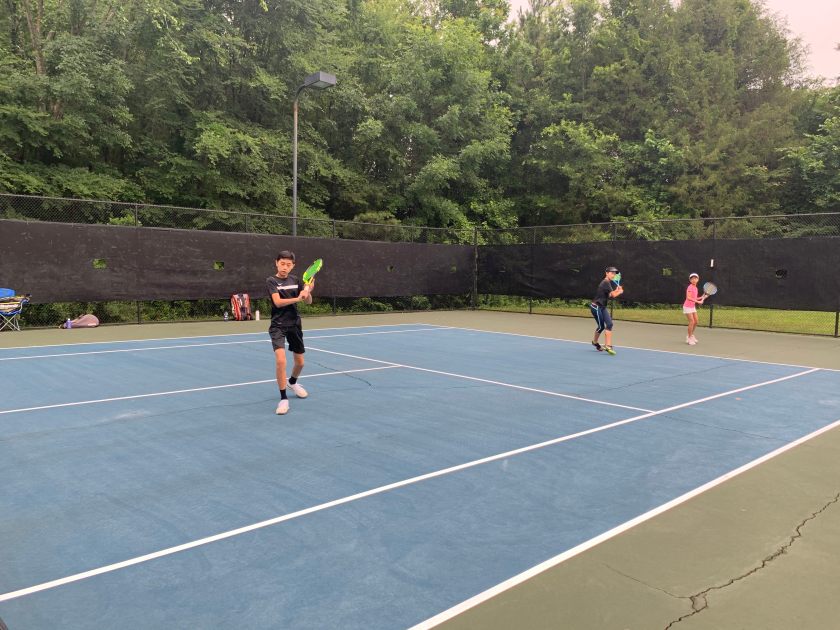


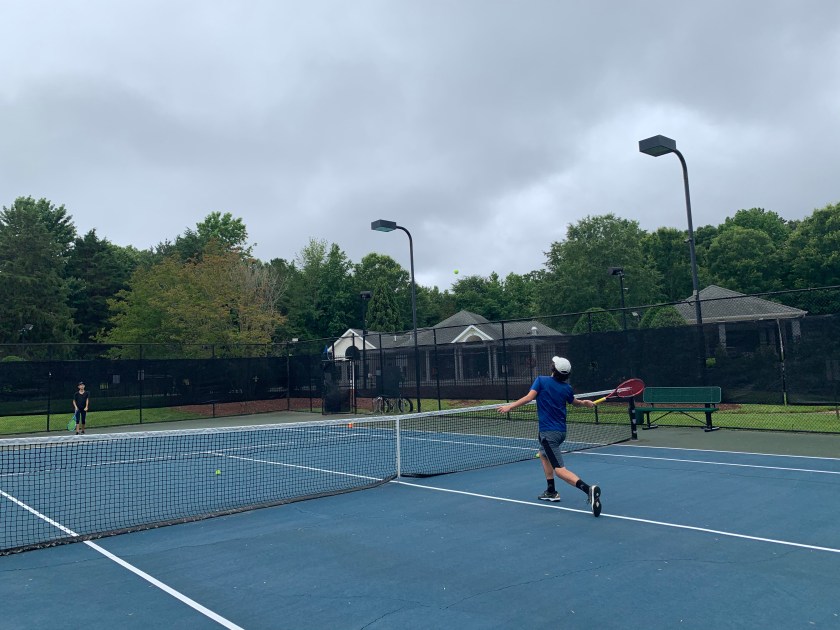
There is a fine line between over coaching and continuous improvement and fine tuning tennis skills. One of the biggest challenges in developing high performance tennis players, is the prioritization of technical skills. Even when players get to around 8 UTR, they are likely deficient in a lot of areas, relative to higher level players. The forehand that got you to 8 UTR may need to be re-worked, if your goal is 10 UTR. Unfortunately for many, the physical skills become the limiting factor above 8 UTR. Conversely, many male players can easily achieve a UTR level of around 7 with basic tennis skills if they have elite athletic ability. If the physical skills are developed(see Tennis Athlete Benchmarking post), technical deficiencies can be protected in part by a players ability to fight through nervy moments of a match and defend his side of the court. High level offensive skills aren’t needed in most cases below 8 UTR.
How perfect do those foundational strokes need to be?
Having watched 100+ D1 college tennis matches, I’ll say they don’t have to be perfect, but a player identity is significant at the upper levels.
Not fully knowing what to expect, my first college match that I attended featured two nationally ranked teams. I was amazed at the different styles of play that were featured across the six lines of singles play. The line 6 player from USC Gamecocks exclusively chipped his forehand. Who taught this and why is he playing this way in a college match? The line 2 player from USC had a two-handed forehand. (who teaches this?) The players on both sides are elite players, highly recruited and they aren’t playing like the “book” says. In fact, across all twelve players, there was not a single player that even remotely resembled the technique of the current top ATP players….Federer, Djokovic, Nadal.
I can’t stress enough how important it is to take your junior players to go watch college matches. I’ve learned so much the past 7 years and have been to some of the best matches including two NCAA championships and two National ITA Indoors. All of these were driving distance and mostly free to attend.
The first time I saw UVA’s top player, Mitchell Frank play, I thought maybe he was injured. Here is a guy that has very little rotation on his forehand, almost exclusively arms the ball, doesn’t hit with a lot of power but he did not miss and his technical skills matched perfectly with his play style identity.
The serve however, I think is very “under coached”. I’m amazed at how many elite players at D1 have pretty average serves. These guys have spent a gazillion hours on court banging balls since they were old enough to tie their shoes, and a large portion of them can’t serve well relatively to the rest of their game.
Sometimes even your best skill needs to improve if there are rewards that can come from minor improvements. The serve is that skill that just small improvements can make a significant difference. My son, who has a better than average serve and could definitely play at a higher level with the foundation that he currently has, but there is still room to improve his serve. Could we be over coaching? Only time will tell and the rewards could be significant if the technical adjustments translate into a higher percentage of first serve and second serve games won.
With new apps like Coaches Eye and HUDL Technique, you can analyze the serve and pick up on the nuances that are hard to see in real time. We use these apps about every two months to evaluate and compare to prior videos and even compare to pro player models. This is why identity is important. You may not want to compare strokes to a baseline grinder if your player desires to be an all court player. You probably shouldn’t use Roger Federer as a serve model if you player has a pin point serve. We typically pick a few players that have similar styles and technique and drill down to the common denominators that are fundamental to the techniques we are trying to achieve.
What’s your approach? Leave a comment if you agree or disagree with this approach.

 Find Your Game