
The Top 4 Skills for Intermediate Players
Intermediate pickleball players should focus more on targets at the intermediate level, once consistency at peer level is achieved for the first 4 shots. When the serve, the return, third shot and fourth shot are rarely ever missed, it is time to refine the targets to advance in level.
As you advance in level, and play better players with more speed and challenging balls, receiving skills will continue to be important in how you read, react and prepare for your shots regardless if you are on the baseline or at the NVZ.
Let’s start with the return of serve, footwork. Intermediate and advanced players will advance to the NVZ in time to receive the third shot on balance. The coordination, footwork, mechanics and shot trajectory play a role in your success.
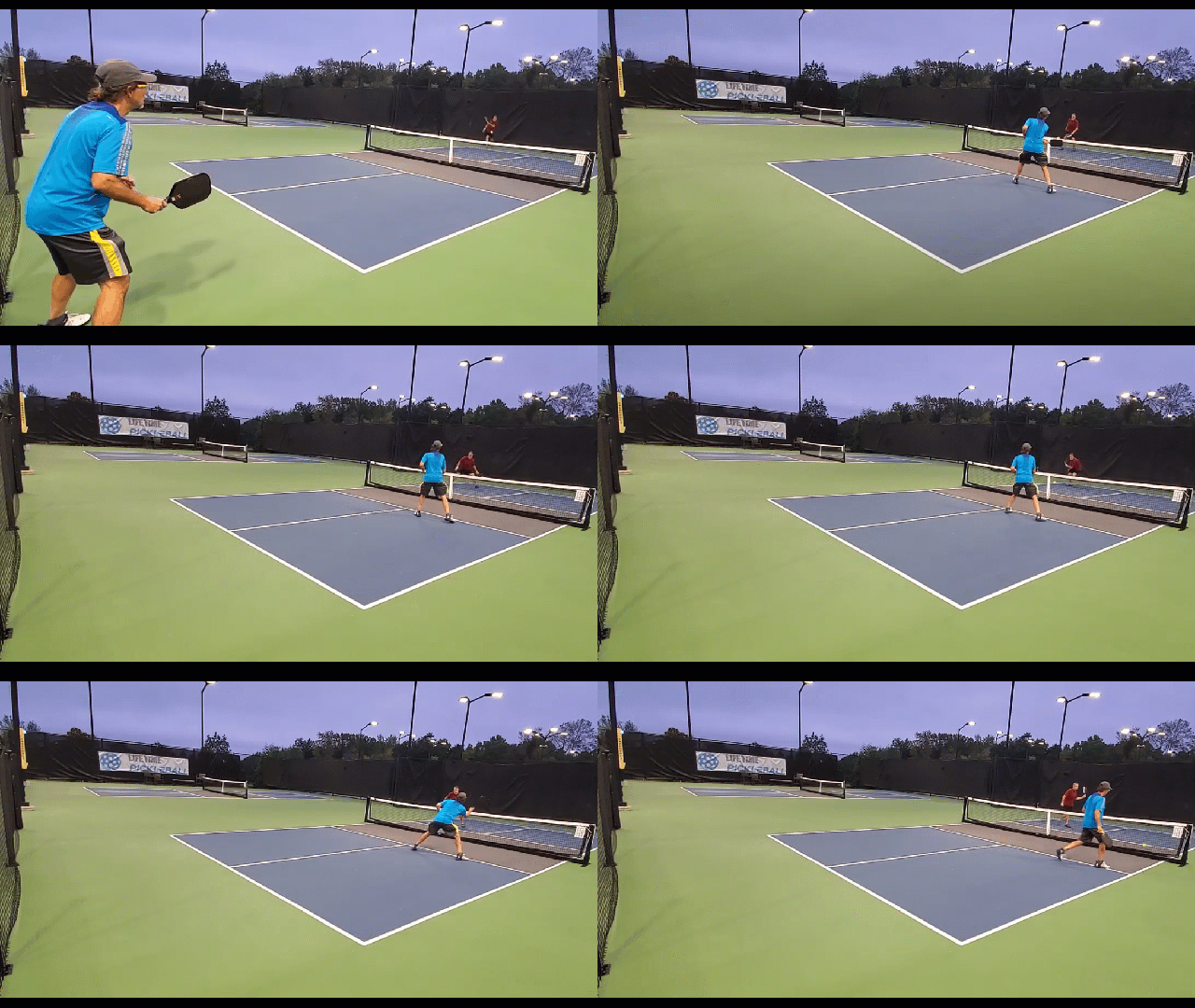
Return – the return of serve can land anywhere in the playing area, however, the deeper and higher the return, the more time you get to move up to the non-volley zone line. Note, that tactically, moving forward to the non-volley zone isn’t optional. Lower serves may require a slice return, while serves that bounce up may allow you to hit topspin. NVZ. A hop step can be useful for shorter, body returns that allow you to stay slightly sideways through the shot on your forehand side, while hopping through the shot.
When returning wide serves, from the right court, a transfer step can be useful to load the outside foot and transfer forward and back into the court. This step will help you recover to the middle of your side, while advancing forward to the NVZ.
A walk step is used to transition through the hit and continue up to the non-volley zone, pausing and splitting on the 3rd shot hit.

Backhand slice approach – Backhand approach can require practice and coordination. The cross behind step is useful to
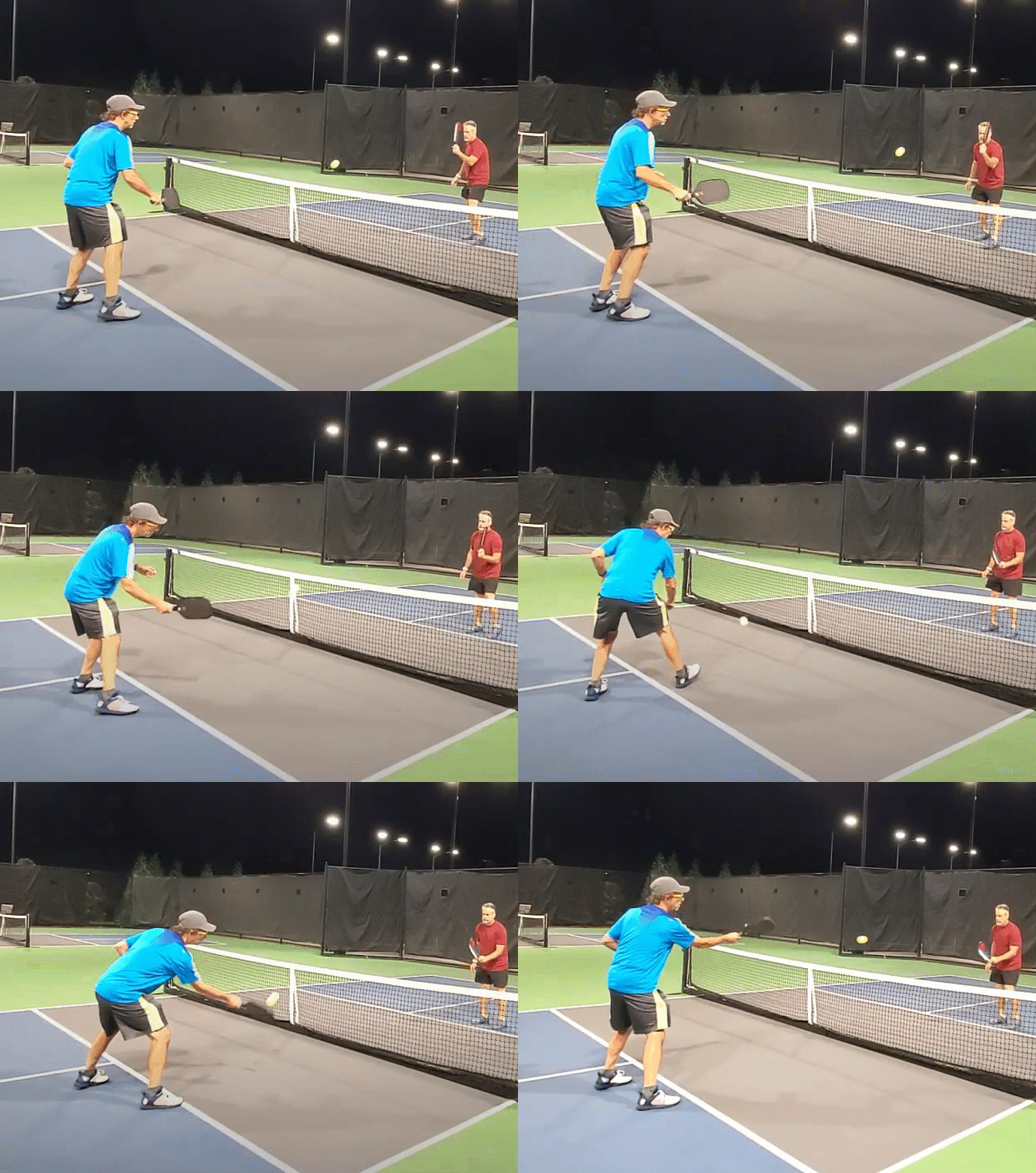
Net Offense – When you are at the net, and your opponent is back, you need to keep the ball deep and at their feet, looking to put away balls that pop up to your strike zone. It is important to stay up at the Non-Volley line to keep your court position advantage. Take balls out of the air if possible, to take time away from your opponent. If they approach, target their feet. If you need to move back, off the kitchen line, try just dropping one foot back, in a pivot, then pivot back up to the line. Lateral movement is initiated by the outside foot. To go left, push with your right foot and to go right, load and push with your left foot. Stay on balance and think feet first and try not to lean laterally. Look for opportunities to redirect. Those are situations where it seems you will target one side of the court, while hitting to the opposite side. An example of a good redirect, is when receiving a high forehand on the even court, you extend your wrist and hit down the line instead of cross court, which seems the obvious target. This will get your opponents off balance and challenge their ability to defend. Note example below.

Dinking and net play- The serving team should attempt to drop the ball in the non-volley zone or drive low and transition, as a team to the non-volley zone. Once all 4 players are at the kitchen line it is common to engage in a 4 person net exchange. Quality dinking is an important skill to win these battles. The lower and deeper (near feet) the better chance to receive a pop up and put away. Don’t ignore lobs and speed ups when an opportunity arises. It is important to reset to ready position quickly after each shot. Be sure to drop the paddle tip, below the level of the ball as you are “receiving” it, then push upwards with the paddle face pointing towards the top of the fence. Move the handle and the tip at the same rate and trajectory, to avoid the tip flipping on you.
Serve – with the new technologies in paddles and advanced techniques, you can in fact weaponize your serve to start the point on offense as the serving team. Targets, speed and spin can result in weak returns that allow serving teams to advance with aggressive third shot drives and roll drives using shake & bake tactics.


The high and heavy topspin serve can result in short and weak returns, especially against returners that position themselves near the baseline. Forearm pronation is key to getting paddle speed resulting in high heavy topspin. Targeting short angle, T and deep middle are three good tactical options.

The slice serve can be a weapon by targeting right handed returners, weaker backhand side and if you can mix in after a heavy topspin serve you may get free points from a shorter, sliding off the court serve.
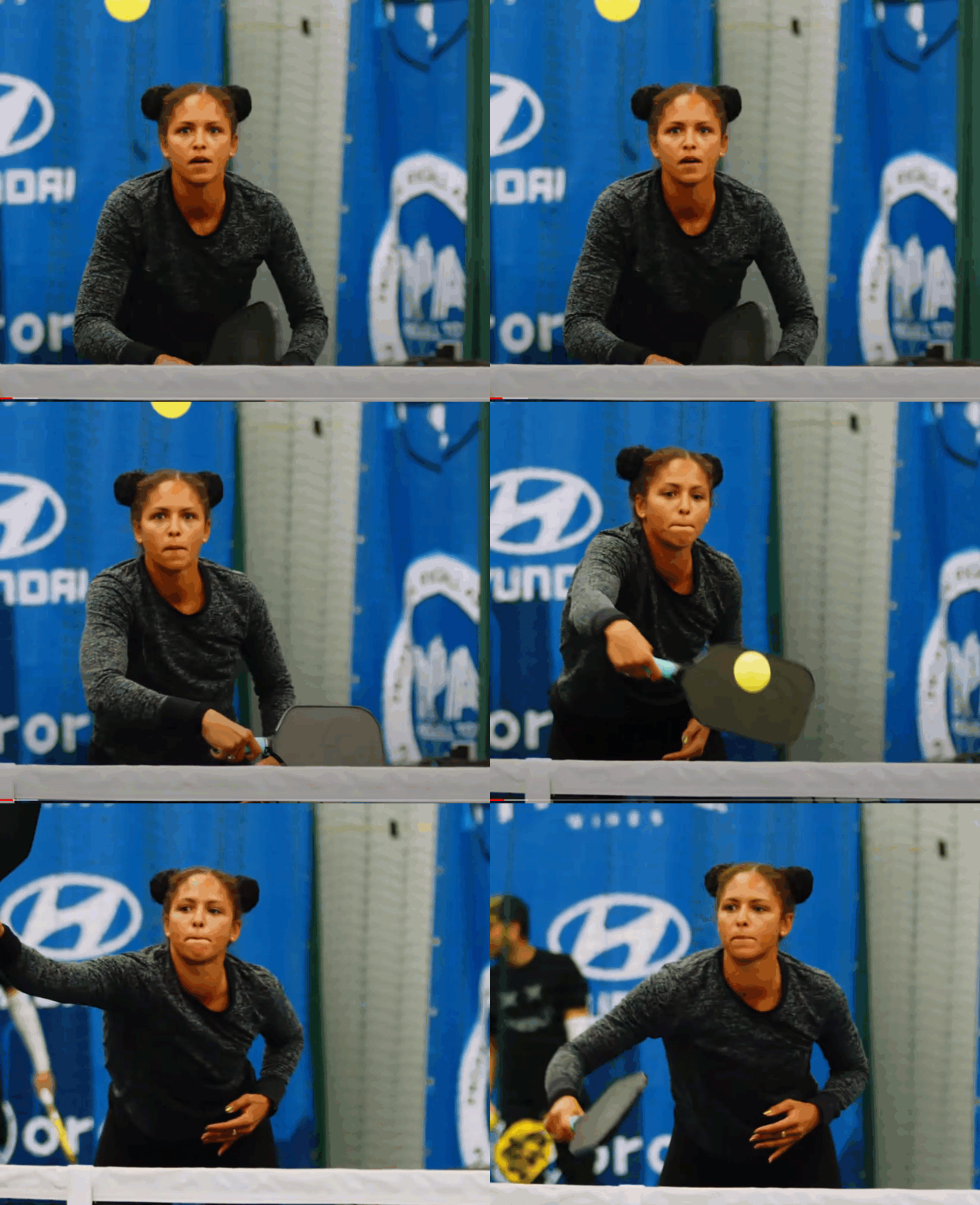
Volley (bonus skill)- There are many volley techniques and patterns. Fundamentally, you should keep the paddle in front of your body and lead with the handle. This means that the handle should go forward, rather than bringing the tip of the paddle backwards to face the ball. Wrist extension on the forehand and wrist flexion on the backhand will angle the paddle face to the ball.

Pickleball is a very dynamic game. Each point will offer opportunities to engage in offense, defense and neutral shots. My job as a coach is to not only help build your skills, but also train you on how to mentally recognize these opportunities and decisions. Pickleball is not binary. Avoid taking advice from recreational players that give you binary (black and white) tips. In other words, if a rec player tells you to “always” do something, they are probably wrong. The game is too situational to “always” do anything. “Forehand takes the middle” may be the worst advice that you will constantly hear on the pickleball court.
Coach Kyle, USPTA Certified Professional
 Find Your Game