
The serve is an upward and outward throwing motion. Training at home by throwing a football upwards is a great way to hone mechanics and increase the shoulder strength. Refining an upward throw motion along with the unloading and proper footwork can be practiced at home. There are differences in the two motions below, namely in the serve, the chest rotates more upwards where a QB typically rotates his chest more forwards. The suppination and pronation action of the arm is similar though during the load and unload phase. Notice how the palm finishes in the same direction (towards the camera) in both motions.
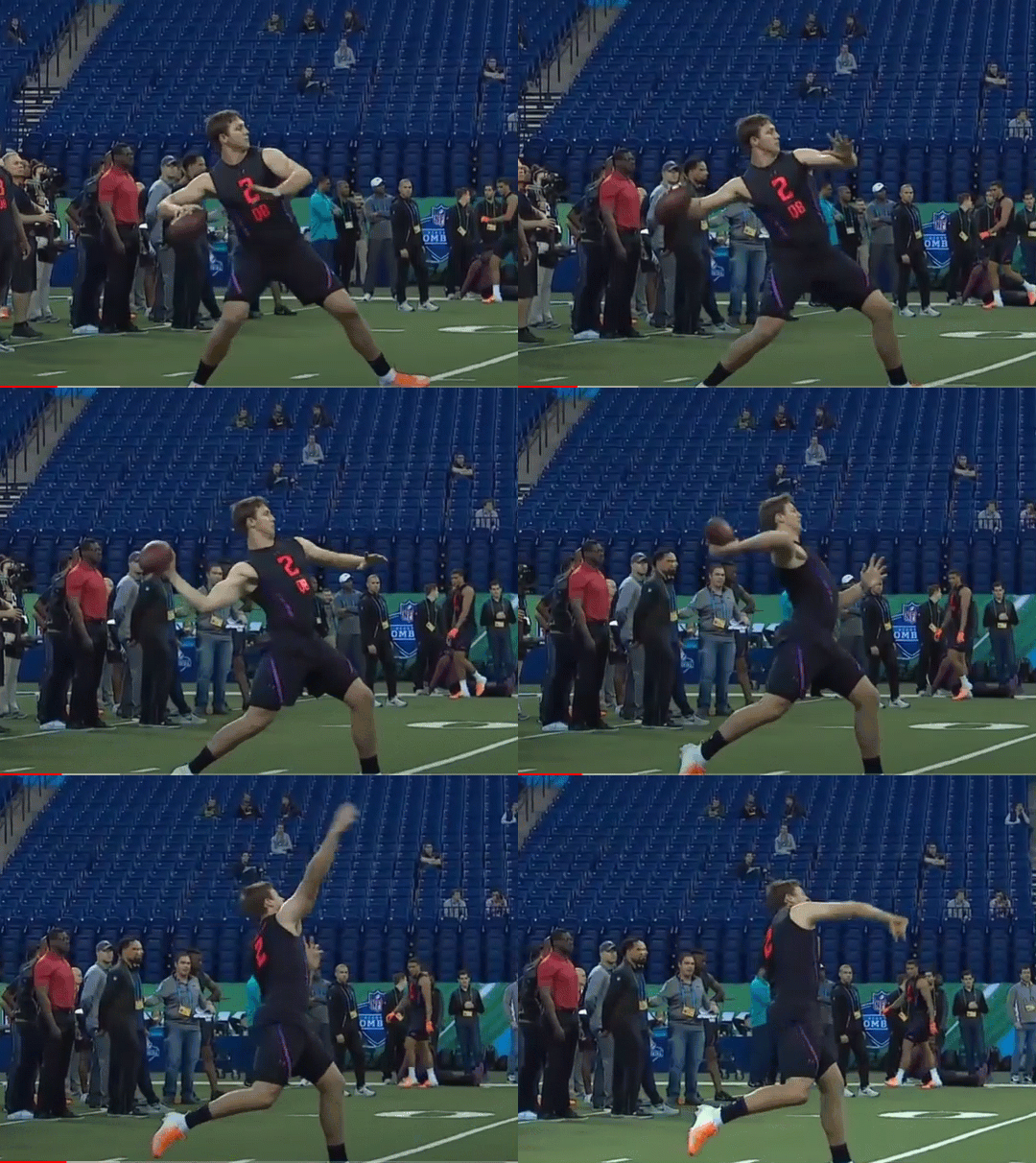
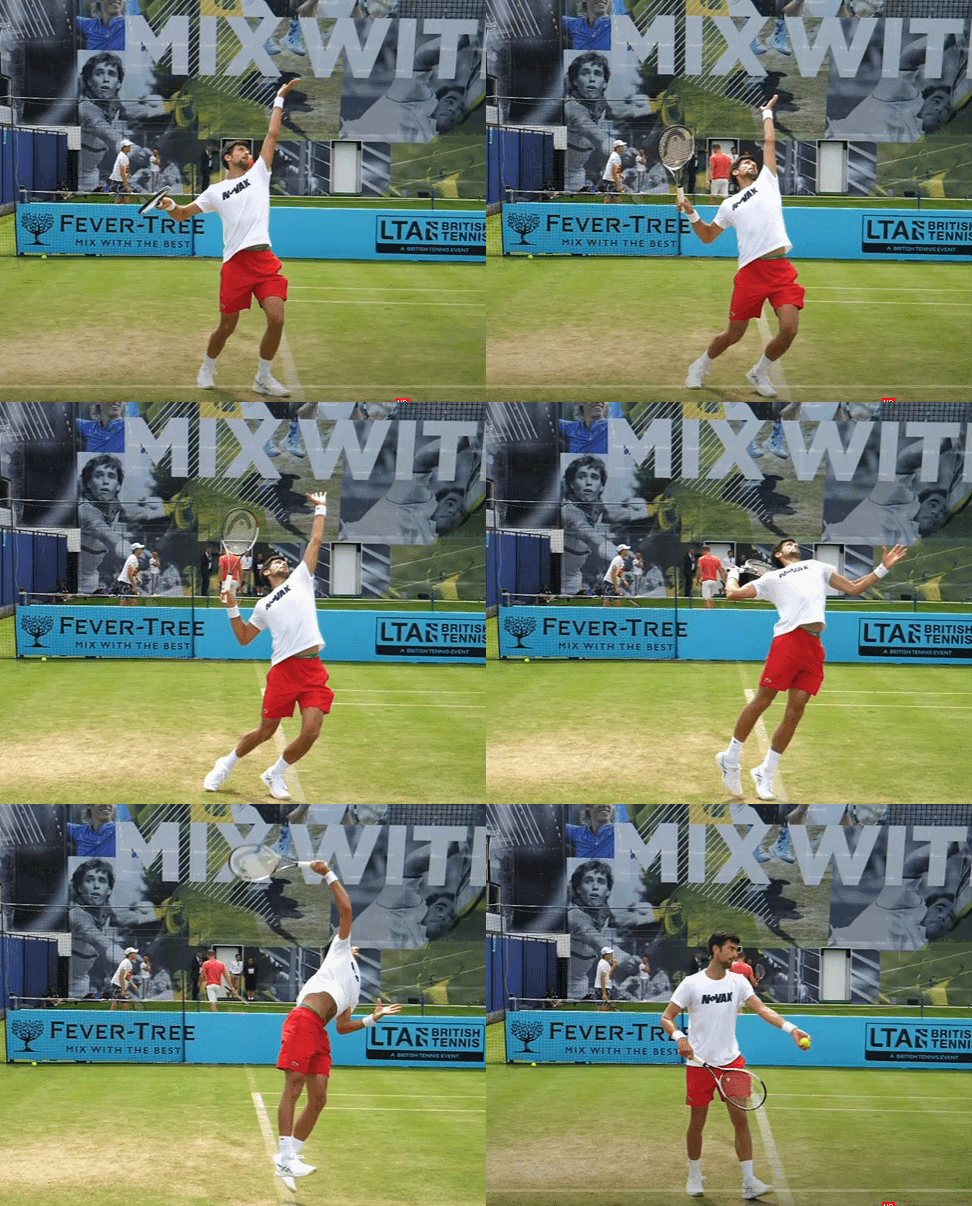
The footwork pattern of the serve is to unload the legs by pushing up from a bent knee position and landing on the off foot [non hitting side foot] then transferring to the hitting side foot and pushing back to receive the return. For a right handed player it’s a land left, then right, then left footwork pattern. Just like below:
The serve progression
Grip– the grip is continental

Stance– in general the feet should be slightly offset, with the non-dominant foot in front and the non-dominate foot behind and slightly offset like above.
Left foot points towards the right net post and the right foot should be parallel to the baseline.
Platform Serve- step-by-step
Step 1 Toss and load
Toss– The toss is executed with a relatively straight arm from the shoulder joint. There should be little to no movement in the wrist joint or elbow joint during the toss. The toss can be performed with the palm up or palm to the side with the ball place in the fingers. The ball should be released around eye level and should be tossed about 2 feet higher than you can reach with your racquet. Keep the lower body still as you toss, then start the loading (knee bend) as the toss reaches the apex. The toss arm should continue upwards after the release of the ball. It is very important that the tossing arm is still up when you start your upward drive.
Load-the load is a coil (shoulder turn) and slight bend of the knees towards the toes. The elbow should point toward the back fence in this phase. The chest should start facing upwards by leaning back slightly. The weight should be equally dispersed on the balls of your feet. The left hip should extend over the baseline with a slight stretch felt in the lats on your non-hitting side.
Key checkpoints:
Feet – right toe pointing towards side fence, left toe pointing towards the right net post
Shoulders- at the peak of the toss, you should be able to draw a straight line from your left elbow to your right elbow through your shoulders.
Hands: both hands you be up, just before you drive up
Step 2 – Drive up and unload
The motion upward starts with the legs driving up, then the racquet is forced downwards where the tip points toward the ground. In this phase, the body starts to uncoil towards the target (net). The elbow will rotate around with the shoulders and start to extend upwards. As the body drives up the racquet tip will point down. During the uncoil, the racquet head will swing out to the side of the body.
Key checkpoints:
Hand- avoid palm facing upward, the palm should face towards the top of the head, the racquet tip should drop to waist level
Elbow- should point to the back fence, then rotate around to the side fence
Chest- should rotate from pointing upward to the opposite fence
Step 3 – Contact and finish
In this phase, the racquet tip will go from pointing down to pointing up then outwards. The mechanics of this phase involve elbow extension and wrist radial deviation, forearm pronation external shoulder rotation, internal shoulder rotation and shoulder braking. The recovery footwork is nearly as important as the serve motion and striking. The footwork is a Left-Right, transition step where you land the left foot, then transfer to the right to catch your balance and momentum in order to recover back behind the baseline.
Key checkpoints:
Hand- the hand,wrist and forearm should be relatively relaxed to allow the release of the racquet upwards and outwards.
Shoulders- very important to slow the shoulder rotation down, just before contact to allow the arm to sling shot through contact with optimal racquet head speed
Feet- the left foot should land just inside the court with a right kick backwards for counterbalance then quickly land the right and push back to the baseline for recovery
Pinpoint serve step-by-step
Step 1 – Toss and Load
Toss– The toss is executed with a relatively straight arm from the shoulder joint. There should be little to no movement in the wrist joint or elbow joint during the toss. The toss can be performed with the palm up or palm to the side with the ball place in the fingers. The ball should be released around eye level and should be tossed about 2 feet higher than you can reach with your racquet. Keep the lower body still as you toss, then start the loading (knee bend) as the toss reaches the apex. The toss arm should continue upwards after the release of the ball. It is very important that the tossing arm is still up when you start your upward drive.
Load-the initiation of the load starts with a “step-up” as you coil (shoulder turn) and slight bend of the knees towards the toes. The elbow should point toward the back fence in this phase. The chest should start facing upwards by leaning back slightly. The weight should be equally dispersed on the balls of your feet. The left hip should extend over the baseline with a slight stretch felt in the lats on your non-hitting side.
Key checkpoints:
Feet – right toe pointing towards side fence, left toe pointing towards the right net post
Shoulders- at the peak of the toss, you should be able to draw a straight line from your left elbow to your right elbow through your shoulders.
Hands: both hands you be up, just before you drive up
Step 2 – Drive up and unload
The motion upward starts with the legs driving up, then the racquet is forced downwards where the tip points toward the ground. In this phase, the body starts to uncoil towards the target (net). The elbow will rotate around with the shoulders and start to extend upwards. As the body drives up the racquet tip will point down. During the uncoil, the racquet head will swing out to the side of the body.
Key checkpoints:
Hand- avoid palm facing upward, the palm should face towards the top of the head, the racquet tip should drop to waist level
Elbow- should point to the back fence, then rotate around to the side fence
Chest- should rotate from pointing upward to the opposite fence
Step 3 – Contact and finish
In this phase, the racquet tip will go from pointing down to pointing up then outwards. The mechanics of this phase involve elbow extension and wrist radial deviation, forearm pronation external shoulder rotation, internal shoulder rotation and shoulder braking. The recovery footwork is nearly as important as the serve motion and striking. The footwork is a Left-Right, transition step where you land the left foot, then transfer to the right to catch your balance and momentum in order to recover back behind the baseline.
Key checkpoints:
Hand- the hand,wrist and forearm should be relatively relaxed to allow the release of the racquet upwards and outwards.
Shoulders- very important to slow the shoulder rotation down, just before contact to allow the arm to sling shot through contact with optimal racquet head speed
Feet- the left foot should land just inside the court with a right kick backwards for counterbalance then quickly land the right and push back to the baseline for recovery
 Find Your Game