
In this article, I will provide the fundamental elements and technical checkpoints of an advanced tennis backhand. We will address the ready position, the first move, the pre-load, footwork, contact move and recovery. We will use right handed player models.
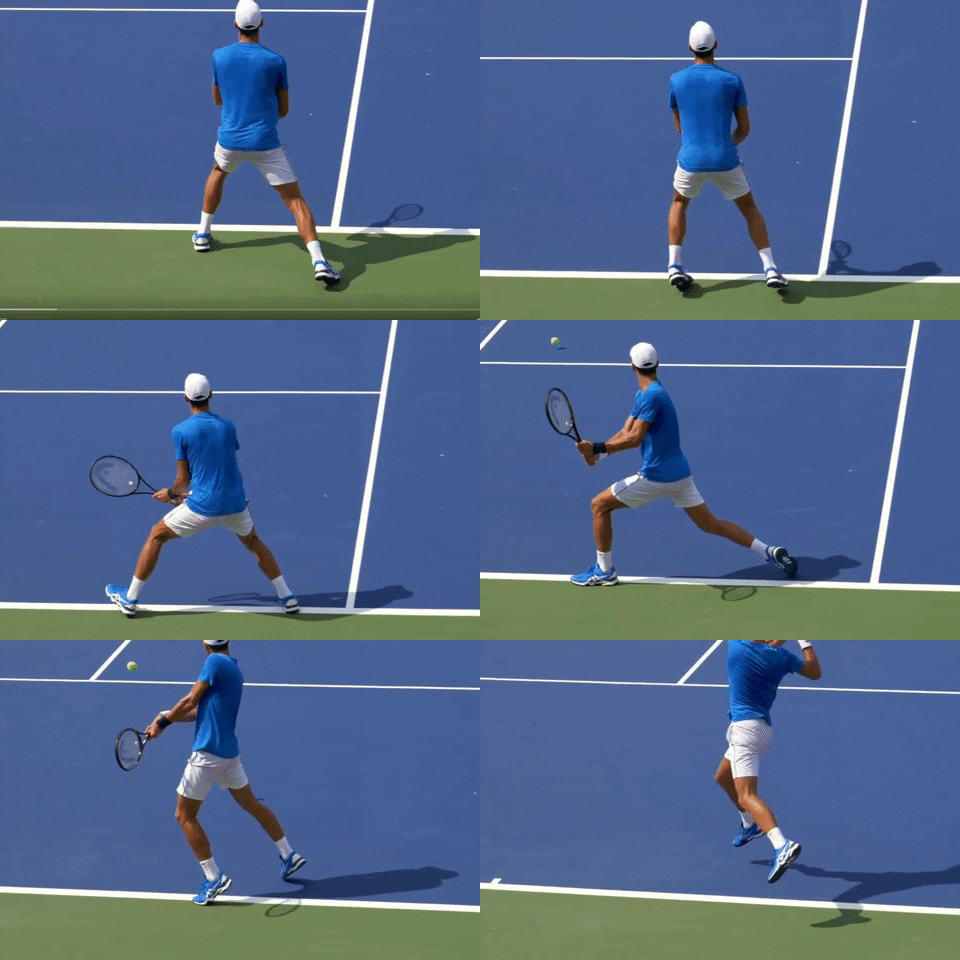
For two handed technique, the pre-load position is achieved by simple staying connected with the arms, hands, hips with a unit turn. Ideally the racquet tip stays slightly above the handle height during the pre-load. As the player finds the contact position, a small step forward with the front foot will add loading as the racquet extends back and starts the unload. The unload may be from the ground, the hips or the shoulders just depending on the space that is created and the scenario. Generally, the shoulders should rotate towards contact which will sling the arms out towards contact point. The left elbow is likely to extend (straighten) into contact. By keeping the forearms relaxed, this allows the racquet tip to drop below the handle level then tip up, through contact. Contact point will be near the front hip or front foot, and depending on the target it may be slightly behind or slightly in front of the hip/foot but not too far in front that requires the player to “reach” for the ball. It will be natural for the back hip to continue around and pivot and land the back foot to the side, finishing facing the net after contact.
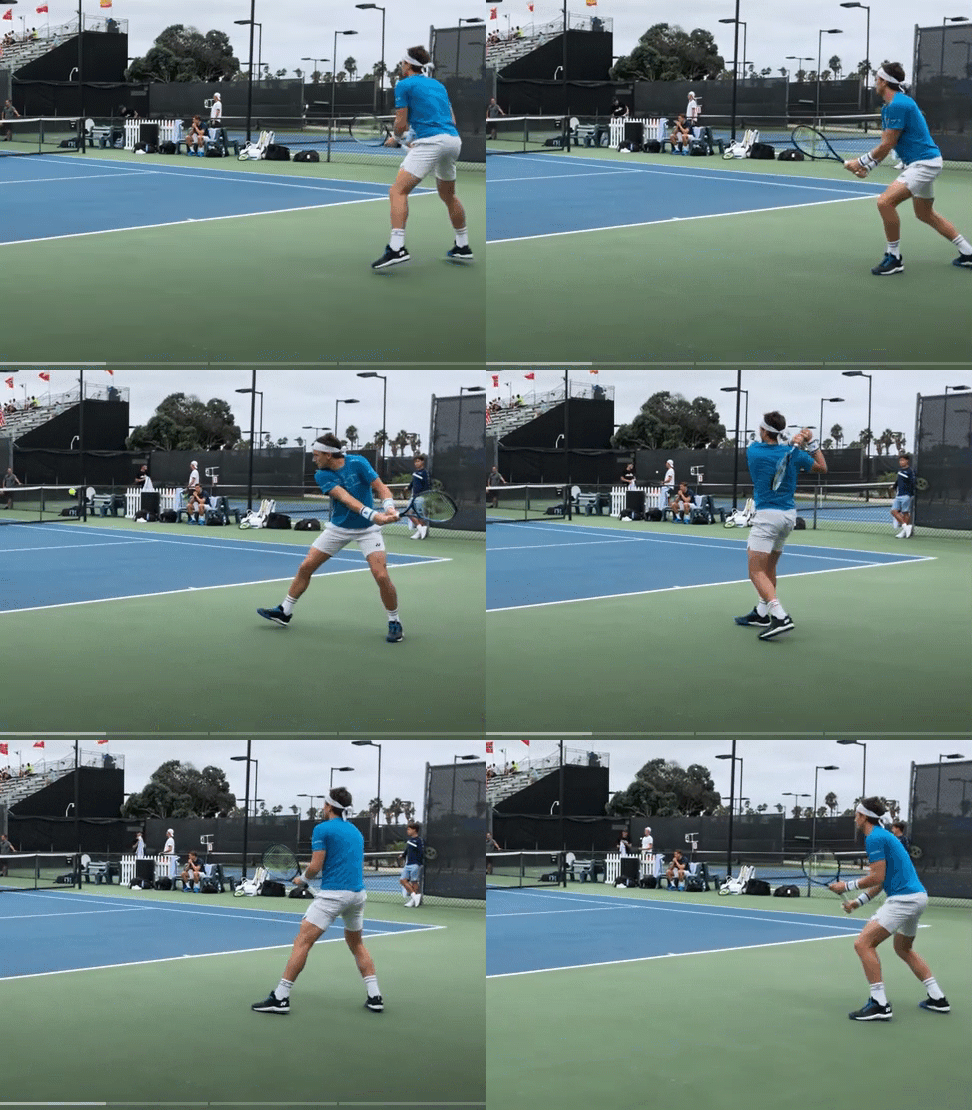

Common errors that I see are not extending the hitting side arm through contact and turning towards the court a little too early or not coiling enough on the pre-load. Another error is not aligning the outside foot to the incoming path of the ball. Notice the video below how it’s the left foot that is aligned to the path of the ball. Many right handed players tend to use the right foot for alignment which closes off the hips too much.
Practice: To work on the backhand, it is best to work with targets to get a “feel” for the angles required to hit cross court vs down the line as well as the proper height over the net which is about one or two racquet length above the net minimum.
 Find Your Game